Last updated on October 2, 2025, 2:06 PM
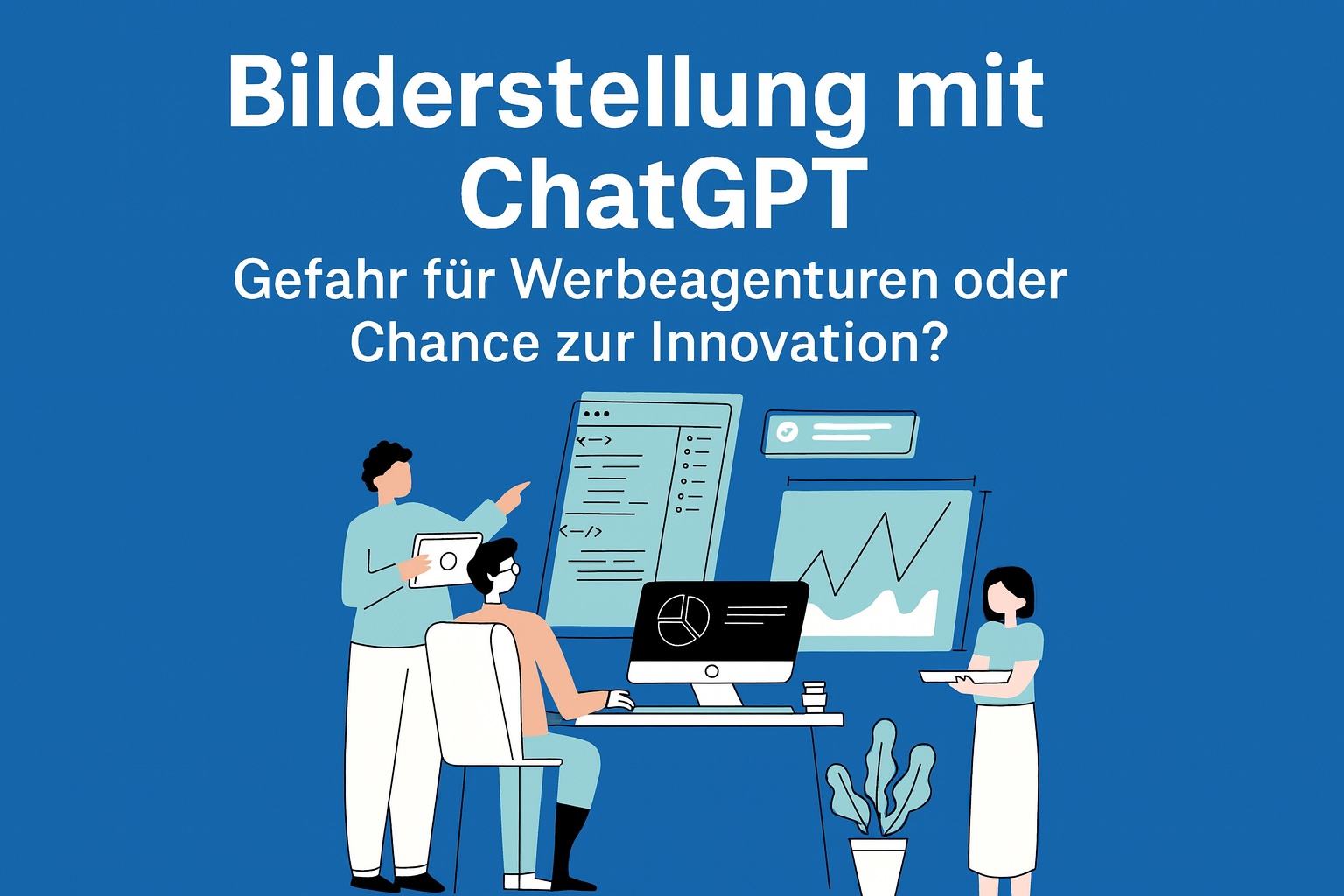
Do you know that feeling when you suddenly feel like your entire business model could be at risk? This is what many advertising agencies are feeling right now since ChatGPT-4o came around the corner with image generation.
In this article I will show you:
- How well ChatGPT from version 4o can create images - and what the limits are
- Which specific use cases make sense for agencies today
- Why the tool is not a danger, but a driver of innovation
- How to sensibly integrate ChatGPT into your agency setup
What can ChatGPT actually do in the area of image creation?
A lot has changed since the release of GPT-4o (the “o” stands for “omni”): OpenAI has created a multi-model that not only understands text, but can also generate language, images - and even visual content. In the Pro version, ChatGPT-4o can directly create images from prompts.
With ChatGPT5 the whole thing became even more sophisticated and better.
Quality: At mid-journey level?
The image quality is impressive. Comparable to Midjourney V6 - but with one crucial difference: operation is simpler because everything runs in one tool. You don’t need a Discord setup, no additional tools, no API connections.
Strengths of GPT-4o in image generation:
- Realistic scenes, harmonious composition
- Diverse styles: from photorealistic to comic to abstract
- Good understanding of prompts (including emotions, brand styles, etc.)
Weaknesses:
- Hands, text on images - as with other generators - not yet completely clean
- Less control over details than DALL·E via API
- No “training” on your own style (not yet)
Example prompt:
“Create an advertising creative for a vegan energy drink startup in a cyberpunk style, with bright colors and dynamic movement.”
The result? Close to art direction quality – within seconds.
Danger for advertising agencies?
Now the provocative question: Do we still need creative agencies when ChatGPT delivers images like this?
In short: Yes, but different.
Agencies that define themselves purely through design production feel the pressure first. Because:
- Stock image portals are losing relevance
- Social media visuals can be automated
- Mood boards and campaign ideas are created promptly
BUT: The difference lies in strategy, context and brand management.
An AI doesn’t know when “too much neon” doesn’t fit with the brand DNA. It does not recognize cultural nuances or subtle psychological triggers in target group thinking. This is exactly where the strength of good agencies lies.
This means: Anyone who only produces will be replaced. Those who orchestrate remain irreplaceable.
Opportunities: This is how smart agencies are already using ChatGPT today
If you don’t fight against the tool but integrate it, you save time and money - and raise the creative bar.
1. Visual prototyping in customer meetings
Instead of just talking about ideas, you can visualize them in real time. Example:
Customer: “I would like something in the style of Stranger Things – but more feminine.” You: Prompt to ChatGPT → Generate image → Feedback → Version 2.
This saves rounds, misunderstandings – and impresses.
2. Scale campaign assets
Instead of building 50 variants in Photoshop, you create a prompt template and generate dozens of ad visuals in one style. Worth gold, especially for performance campaigns (Meta Ads, Google Display, etc.).
3. Development of ideas in the creative team
AI as a sparring partner: During brainstorming sessions, you can provide quick visualizations to validate creative directions - or discover completely new ones.
4. Content for blogs & social media
Illustrations, header images, image series: you can automate a lot of things and even test A/B variants.
How to sensibly integrate ChatGPT into your workflow
ChatGPT is not a replacement, but an add-on. The right setup is important.
1. Define use cases
Image AI doesn’t make sense everywhere. Good starting points:
- Initial visualizations for pitches
- Ad variants in social media
- Content accompanying images (blog, white paper, newsletter)
2. Build a prompt database
The better your prompt, the better the picture. Create a collection for:
- Styles (Retro, Futuristic, Minimalist…)
- Emotions (joy, excitement, trust…)
- Brand values (sustainable, premium, playful…)
Use Prompt template tools like FlowGPT or PromptHero to get started faster.
3. Connect with other tools
Combine ChatGPT-4o with:
- Figma (build mood boards)
- Notion (maintain prompt database)
- Zapier / Make (automation of generation + upload)
4. Training & Ethics
Train your team to use image AI: prompting, quality control, copyright. And: Set clear guidelines about what you can and cannot create with AI. Transparency wins.
Conclusion: danger or opportunity?
The short answer: Both – but that depends on you.
Danger if you focus on repeatable tasks that AI makes better and cheaper. Opportunity when you use tools like ChatGPT to expand your offering, deliver faster - and work more creatively.
Because in the end, creativity remains human - but it becomes more powerful when you use technology intelligently.
Further links
If you want to delve deeper into AI workflows for agencies, write to me - or check out the best automation setups for creative processes.